Overview
As grids integrate ever higher shares of renewable energy, planners must evaluate not only the technical performance of storage technologies but also their economic and environmental impacts. This review introduces a multi‑criteria decision analysis (MCDA) framework that brings together techno‑economic optimisation, lifecycle emissions assessment and policy considerations to guide the deployment of integrated energy storage systems (IESS). By combining multiple storage technologies, IESS can deliver flexible services from short‑term frequency regulation to long‑term seasonal storage.
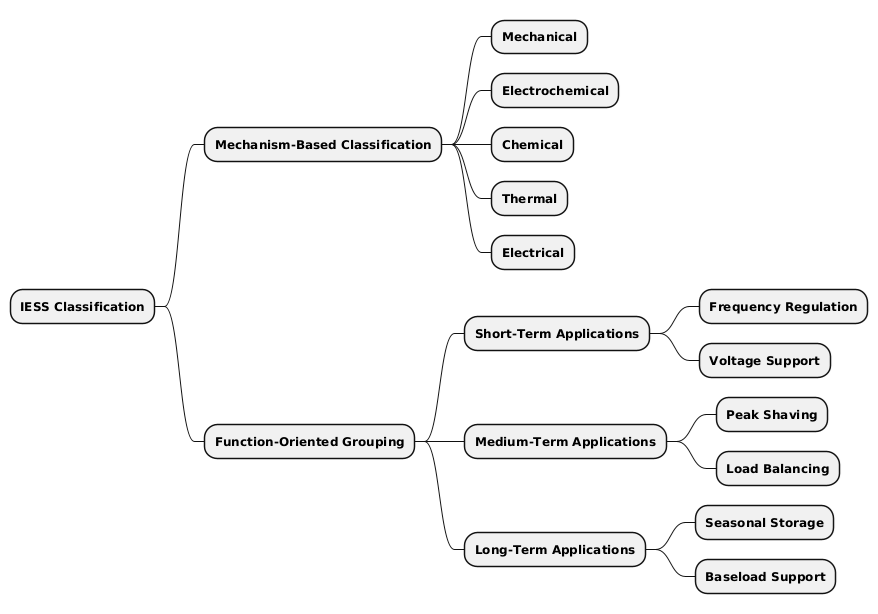
Key Insights
The MCDA framework synthesises technical criteria (e.g. storage capacity and round‑trip efficiency), economic indicators (CAPEX/OPEX and revenues from ancillary services) and environmental metrics (lifecycle emissions and recyclability) to rank storage options. Hybrid systems such as battery–supercapacitor configurations demonstrate up to 15% higher grid stability in high‑renewable scenarios compared with single‑technology solutions [1]. Regional policies—like Kenya’s fast‑track licensing and Germany’s H2Global auctions—shorten deployment timelines by 30–40% and improve project economics, while equity‑focused schemes like India’s SAUBHAGYA cut energy poverty by roughly 25% [1].
Case studies validate the framework: the Hornsdale Power Reserve in Australia delivers 90–95% round‑trip efficiency for frequency regulation, while vanadium flow batteries in Hawaiian microgrids achieve over 15000 cycles with 80% recyclability [1]. The study advocates circular‑economy policies such as the EU’s 70% lithium recovery mandate, which can cut raw material costs by 40%, and notes that a carbon tax of USD100 per tonne CO2‑eq improves hydrogen viability by 25% [1].
Limitations & Future Work
Despite its comprehensive scope, the study relies on static cost projections (for example, lithium‑ion CAPEX of USD 300–600 per kWh) and simplified synergy quantification for hybrid systems. Future research should expand datasets—particularly for emerging markets—incorporate AI‑driven predictive analytics and refine lifecycle assessments to include indirect impacts such as land‑use changes [1].
Technology Comparison
| Technology | Strengths | Limitations | Application |
|---|---|---|---|
| Lithium‑ion batteries | High energy density; fast response; mature supply chain | Finite cycle life; raw‑material cost volatility | Frequency regulation, short‑term balancing |
| Pumped hydro storage | Large capacity; long duration; low levelised cost | Site‑specific; environmental and permitting challenges | Long‑duration and seasonal storage |
| Vanadium flow batteries | Long cycle life; easy scalability; high recyclability | Lower energy density; higher upfront cost | Microgrids, island grids, renewable smoothing |
| Battery–supercapacitor hybrid | Combines high energy and high power density; improved stability | System complexity; control coordination required | High‑renewable grids requiring fast ramping |
References
- R. I. Areola, A. A. Adebiyi and K. Moloi, “Integrated energy storage systems for enhanced grid efficiency: a multi‑criteria decision analysis,” Energies (2023).